Project
EXHIBITION_In the Past We Made History
Earth, Soil and Stone_Photogrammetry and Chalk mural
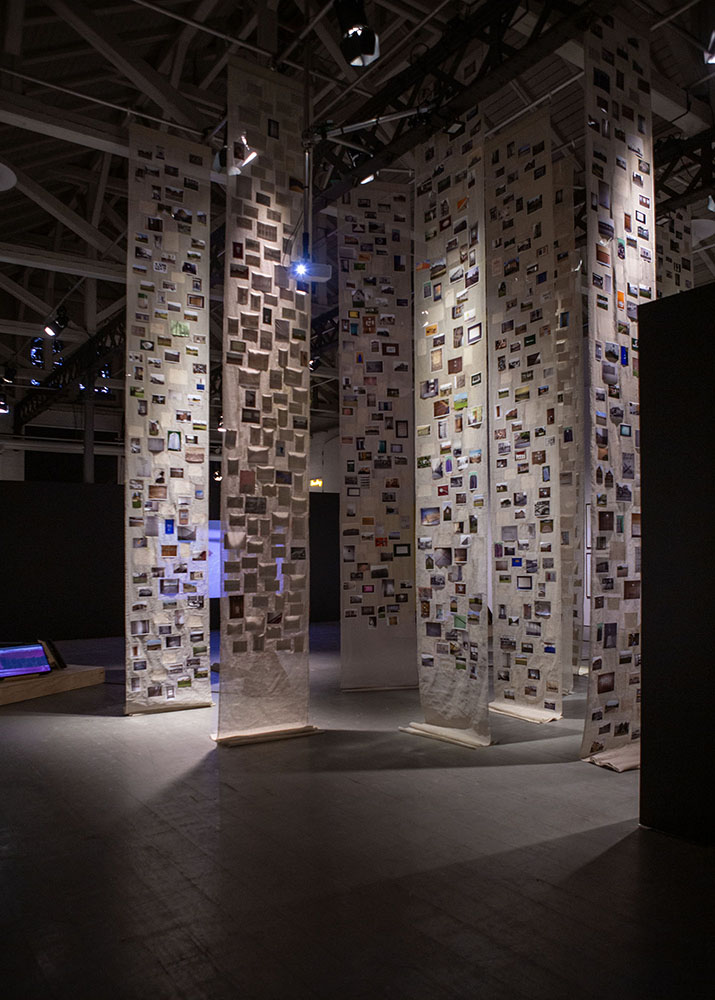
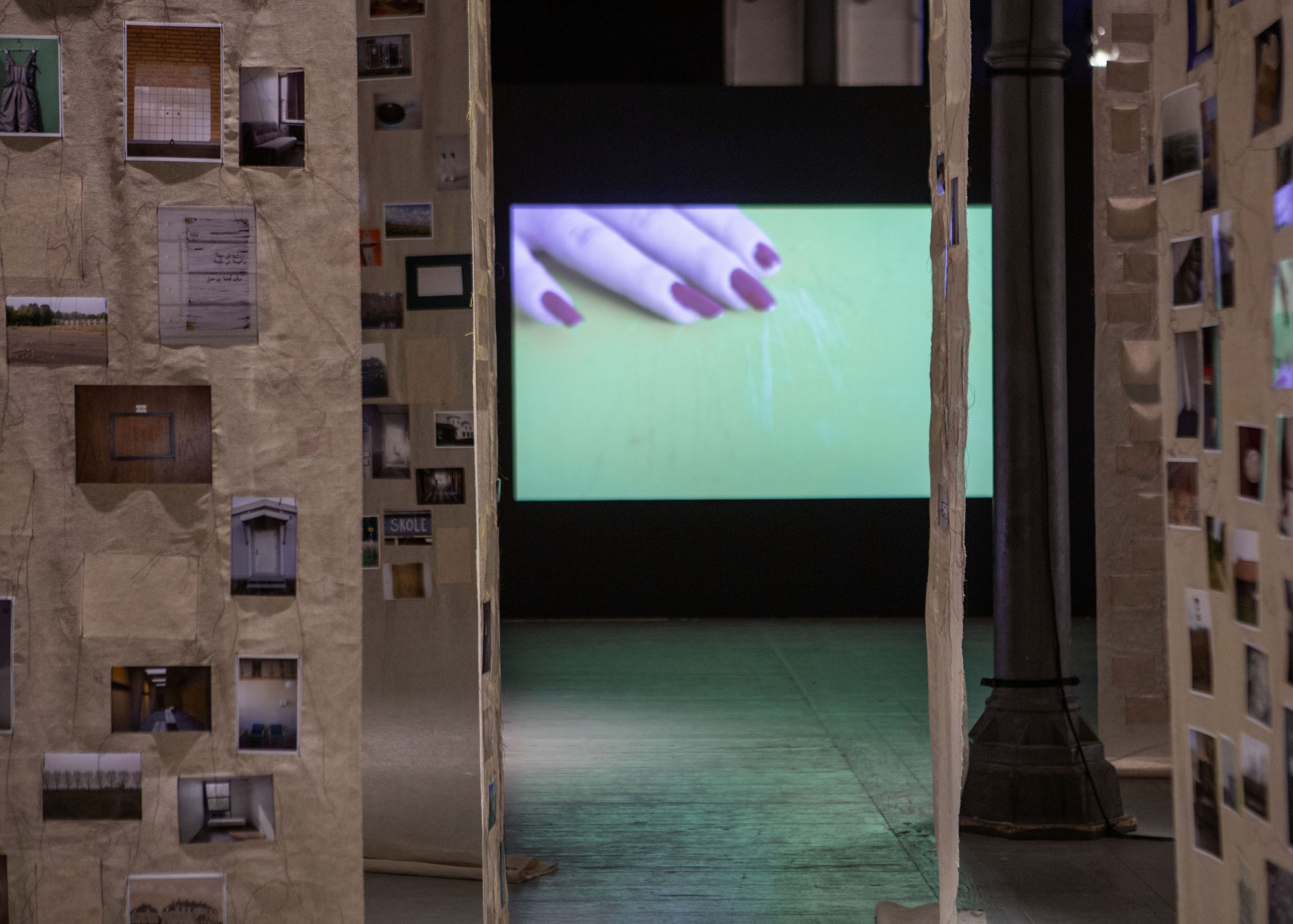
Textile and Photography Installation_ In the Past We Made History
Textile and Photography Installation_In the Past We Made History
EXHIBITION_In the Past We Made History
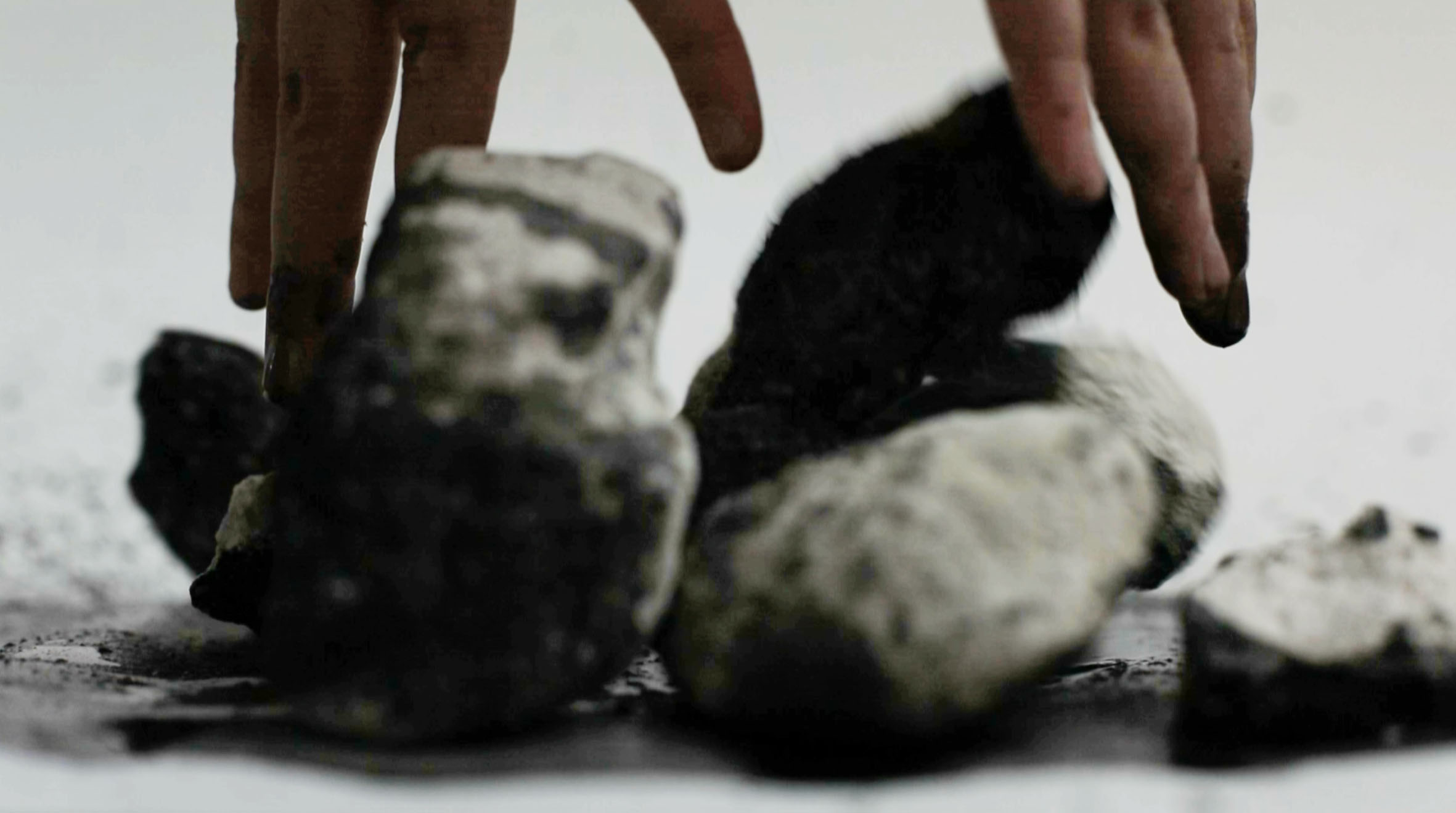
Holding Chalk_Video installation
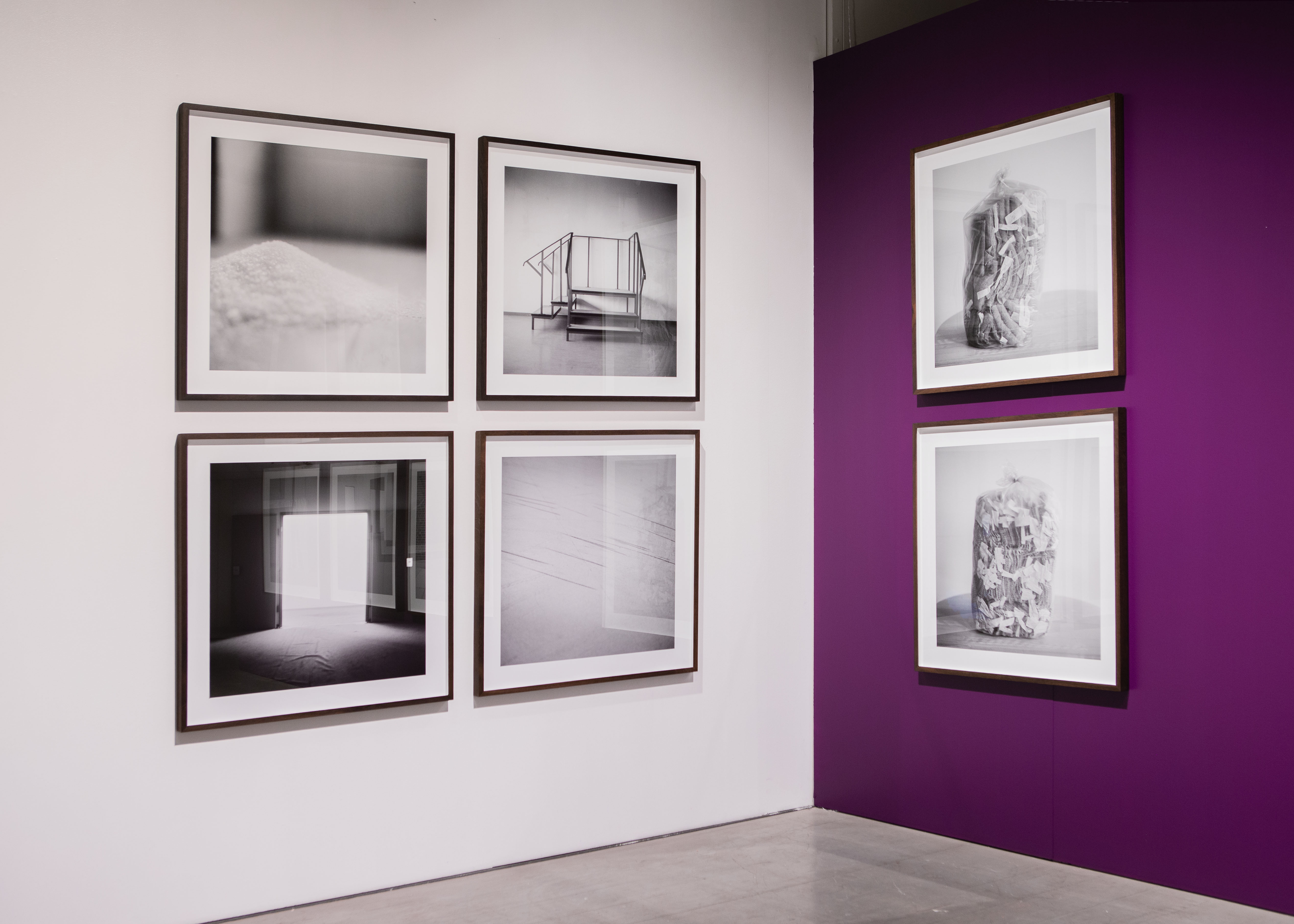
The Memory of Salt, 35 photos, 90 x 90 cm
The Memory of Salt, photograph, 90 x 90cm
Rohin_Video installation
Rohin_Video installation
In the Past We Made History
2025
EXHIBITION_In the Past We Made History
Second Place, a multi-channel videoinstallation
Rohin, videoinstallation
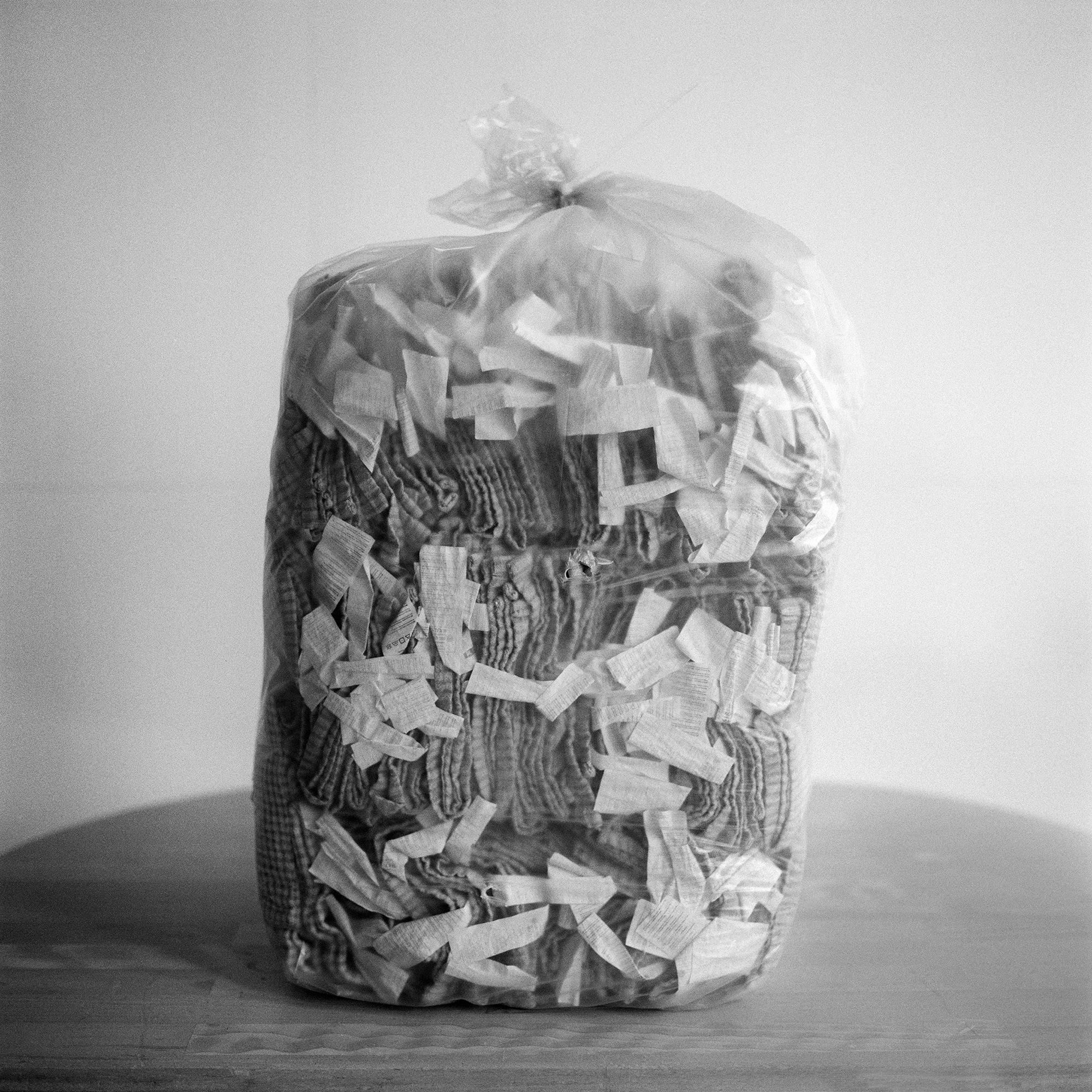
The Memory of Salt, photo 90x90 cm
Earth, Soil and Stone, Video and Photogrammetry
In The Past We Made History
2022-2024
In the Past We Made History
Tina Enghoff & Kent Klich: In the Past We Made History
In collaboration with Anastasija (Nastija) Kiake
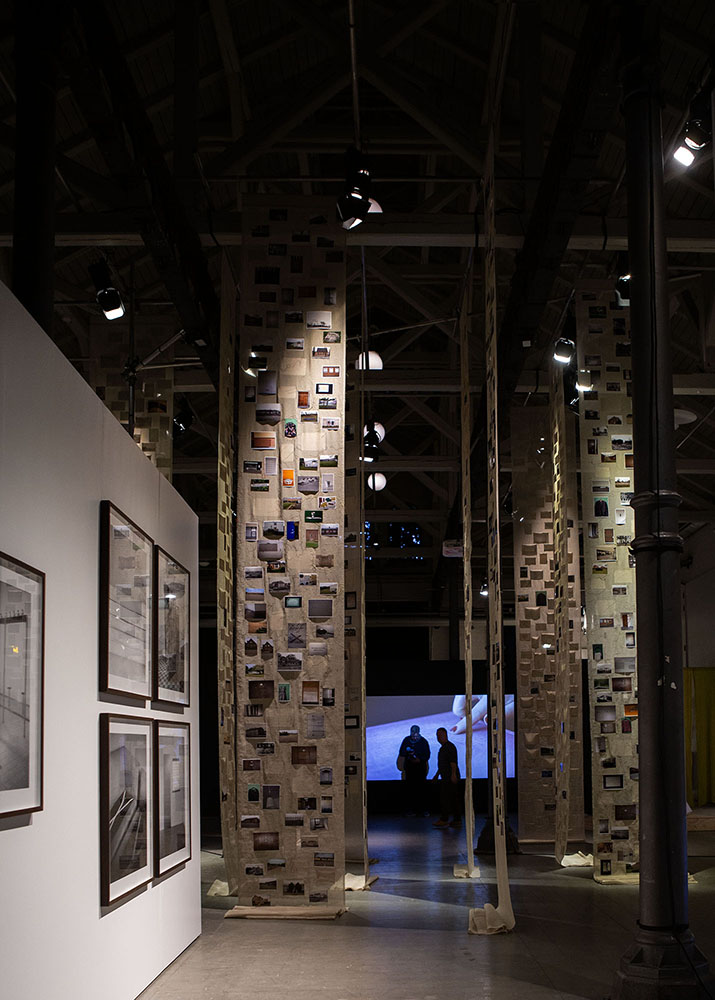
In 2015, Europe experienced a large refugee and migration crisis, with over one million people seeking refuge. In the Past We Made History is an investigation that takes the form of an archive and focuses on strategies of remembering and bearing witness, that is often left out of collective memory or official history writing. Consisting of oral history, photography, photogrammetry, and film installations the archive forms a living tapestry as it continuously opens itself up for change and transformation. The different threads can be seen as multiple timelines that bend past and present.
The archive weaves the fragments of memory of 89 locations that functioned as Refugee Asylum Centers and Emergency Aid Centers until 2018. It holds documentation, 2022-24, of the architecture – buildings, rooms, and textures that shaped the frame around newly arrived people’s daily lives. These images are juxtaposed with the photographs from local archives that are spread over Denmark and represent a broader history of migration.
People/Danes with refugee experience that have relations to the local asylum and emergency aid centers have actively collaborated with the artists, selecting from a wide range of photographs to decide how the archive should be and what they consider worth preserving. The archive thus unfolds and intertwine as both individual archives and a collective archive, offering an opportunity to renegotiate and retell history, with personal life stories and testimonies in focus.
Years between 2015-18 marked a paradigm shift in Denmark – from welcoming people with refugee experience to a more restrictive immigration policy. The archive In the Past We Made History aims to hold the space for the importance of that period, as these places are now either already excluded or in the process of erasure from the public memory in Denmark, which is expressed by their absence in the archives as much as in the repurposing and demolishment of the buildings across the country.
Through the many conversations and artistic processes, one understands that those who search for identities from the past do not do so to understand how their lives might have unfolded differently. They do so to look, persistently, for the faintest reflection of what they are or might become, to recognize the right to be a witness in one’s own life, and to make the experience of those who seek safety through the asylum system a part of Danish history.
22 People/Danes with refugee experience have participated with their unvaluable knowledge and input, deciding and choosing this archive: Abiel, Abood, Adnan, Ahmad, Fili, Eden, Ghazanfar, Ibrahim, Katja, Khaled, Mazen, Moutaz, Rahima, Rohin, Ruta, Sahl, Shokrullah, Senait, Senait, Shewit, Yasin and Yousef. As some of the participants have asked their last name to be omitted, it has been made a collective decision valid for everyone. Anastasija (Nastija) Kiake is a visual artist, writer, and researcher with roots from Latvia based in The Hague, NL, who has collaborated with Tina Enghoff and Kent Klich in developing In the Past We Made History.
In the Past We Made History consists of the following works:
In the Past We Made History, 2022 – 2024
(Textile and Photography Installation)
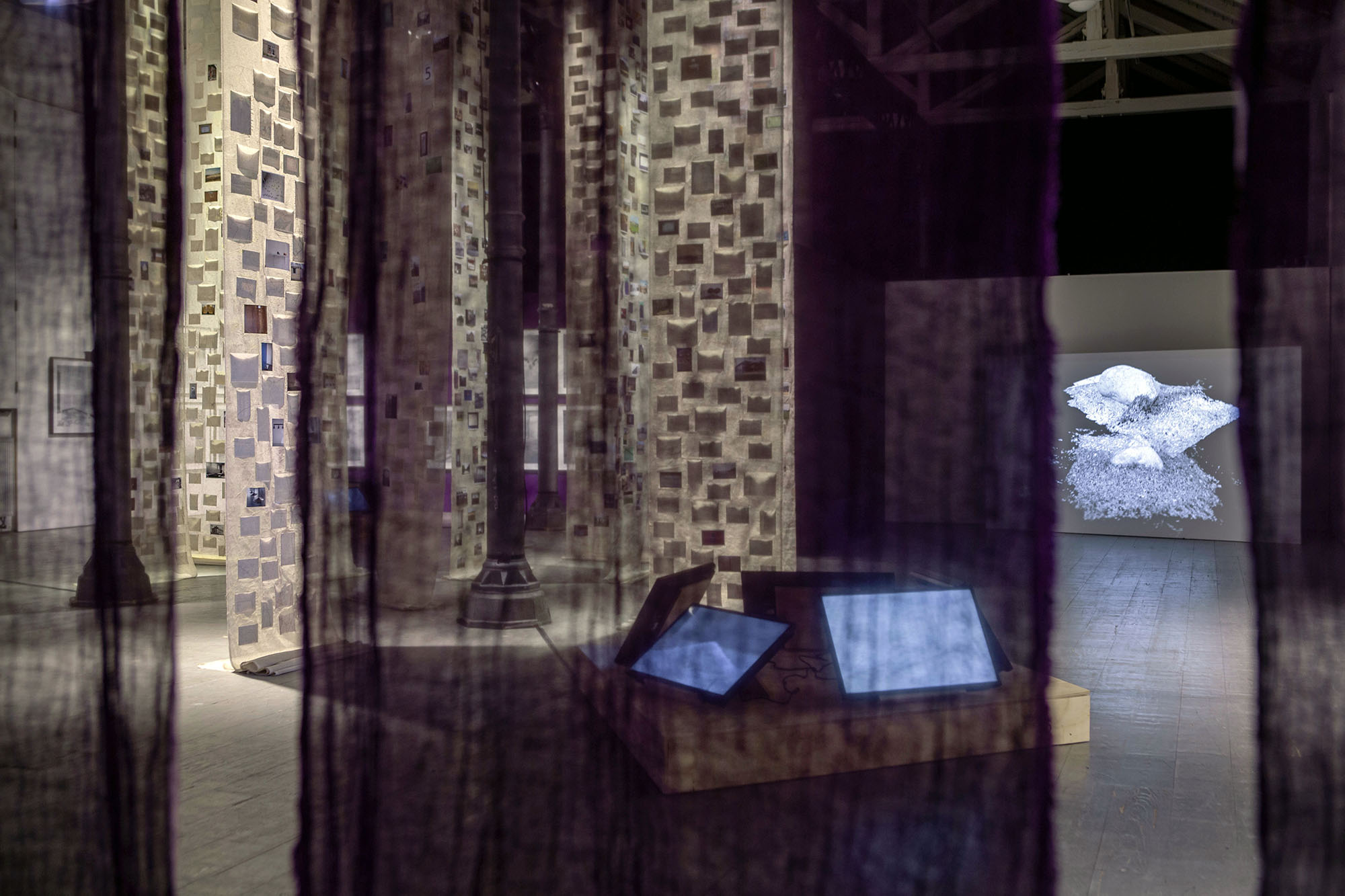
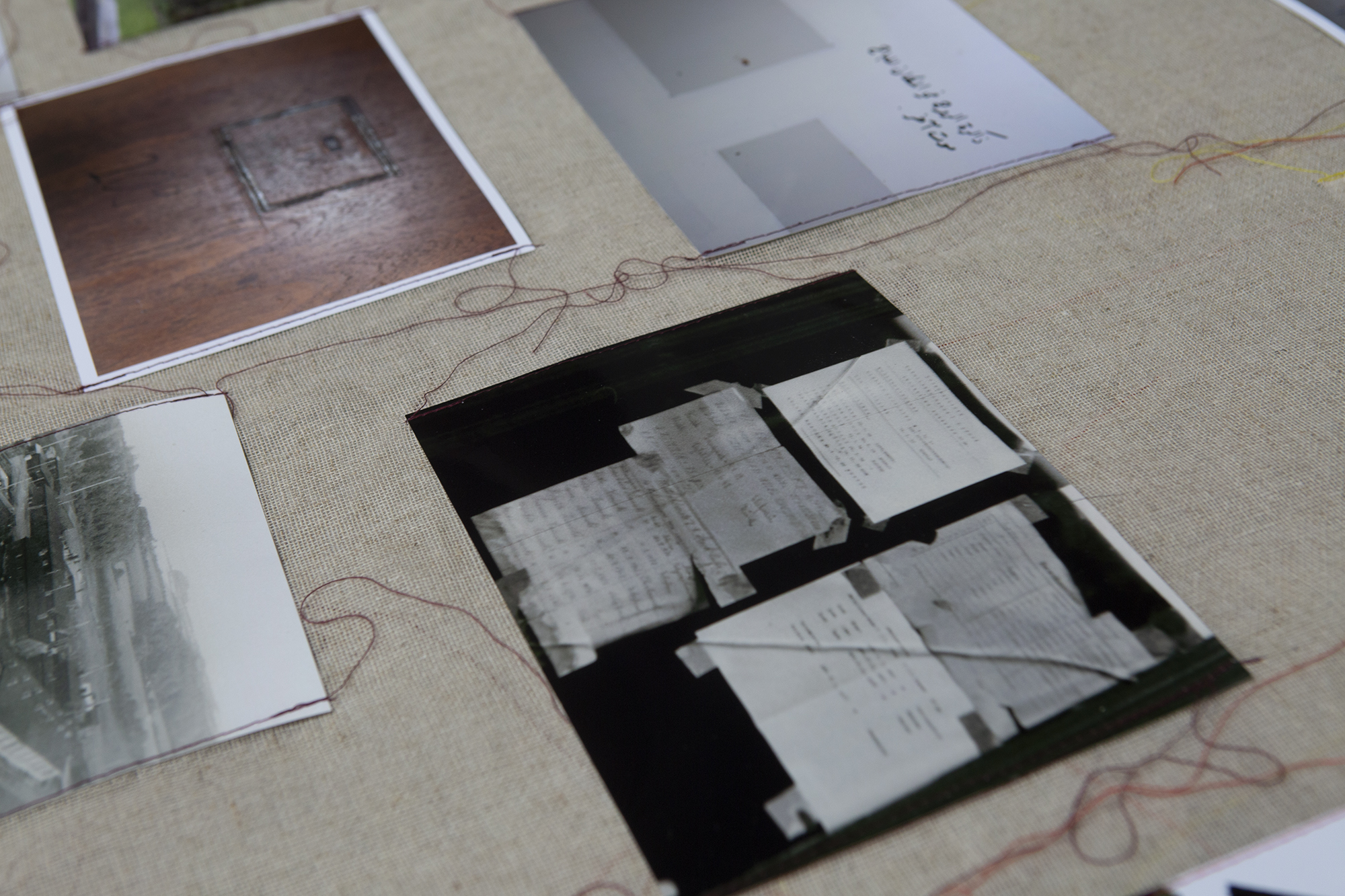
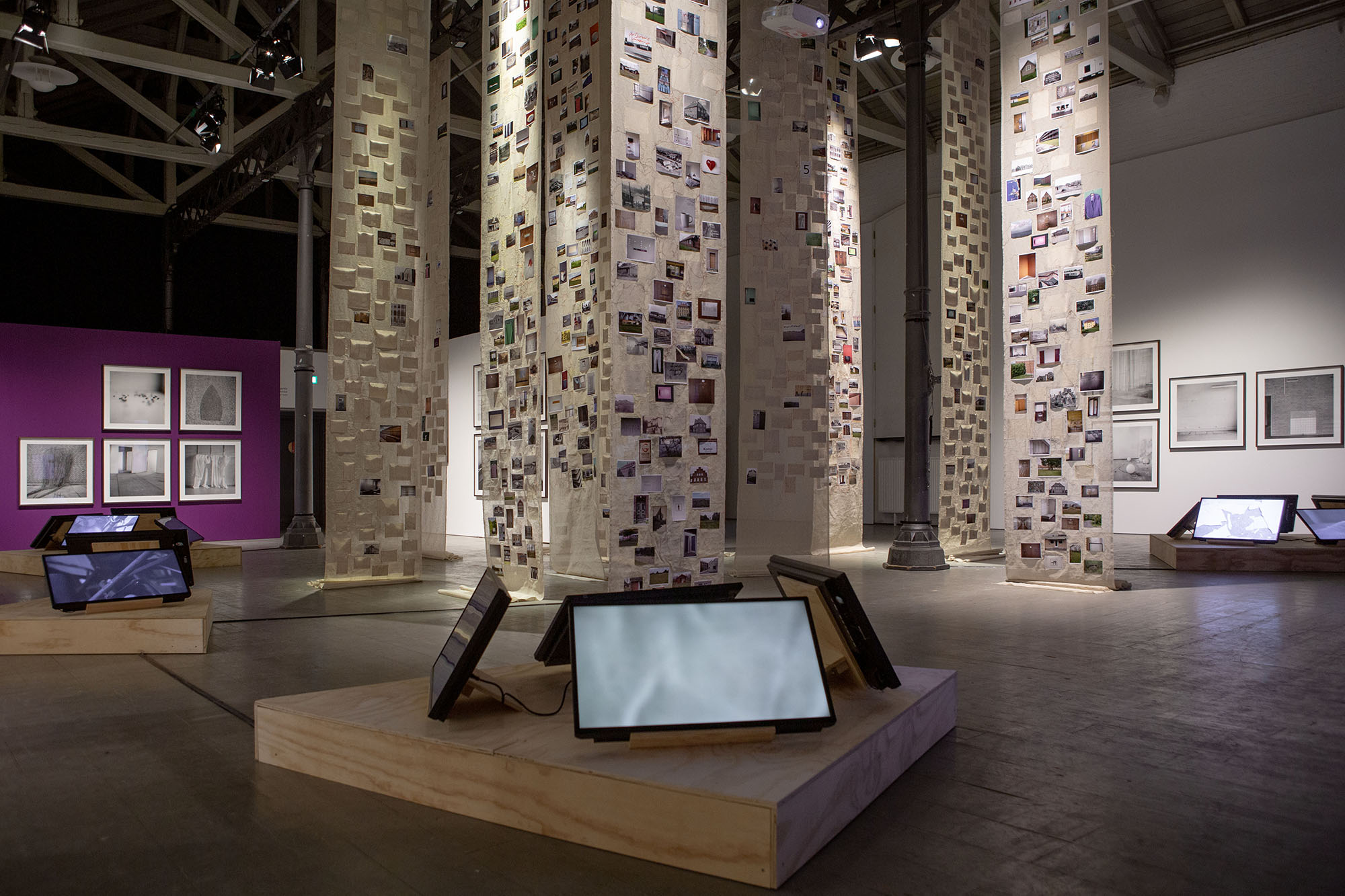
In the Past We Made History is a growing archive continually taking shape in collaboration with the people/Danes with refugee experience. Currently, it consists of around 1400 photographs that juxtapose footage from local archives that show earlier history of migration in Denmark and our documentation of 89 Refugee Asylum and Emergency Aid Centers that have been closed since 2018.
The photographs have been selected by 22 former residents of these locations, who chose the images based on their emotions, memories, and wish to share their experience.
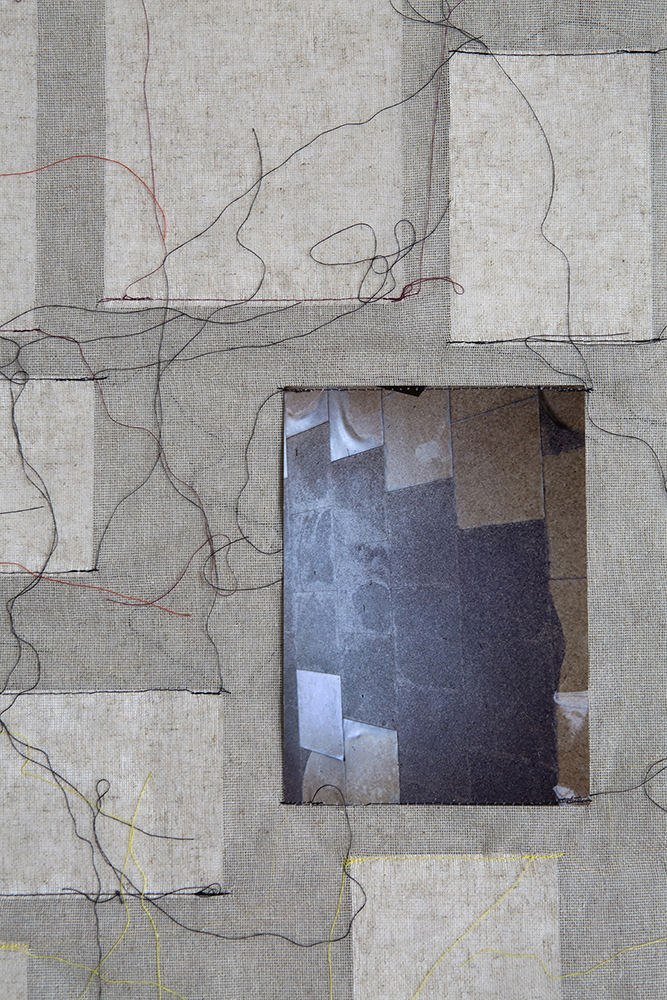
This selection for the archive has been sewn into textiles that now shape a tapestry of multiple interwoven timelines, and subjectivities while keeping the space for evolving in its density, shape, and narration.
Sewing and hand coloring of the textile work: Ulla Enghoff
Note: The 89 centers originate from the document “Udlændinge- og Integrationsudvalget 2018-19 (2. Samling) UUI Alm.del – endeligt svar på spørgsmål 168. Offentligt”. The document is a response from the former Danish Minister of Immigration and Integration to a question (Question nr. 168) that was raised in the Danish parliament in 2019: The minister was requested to provide an overview of locations of Refugee Asylum and Emergency Aid Centers in Danmark.
Second Place, 2022 – 2024.
(Video installation)
Second Place is a multi-channel video installation that shows the documentation of selected locations of former Refugee Asylum and Emergency Aid Centers that are in the process of disappearing by being demolished or repurposed.
Using the camera to witness the objects, textures, and materials of the architecture we question what kind of memories these fragments hold. It is a conversation with the detail that holds a history of touch of the former residents of these locations. The movement of the camera is a journey across the surfaces that shaped the framework around the daily routines and intimate reality of those who arrived, lived, and waited there.
Editing: Anastasija (Nastija) Kiake.
Audio mix: Dror Feiler
Rohin, 2024
(Video )
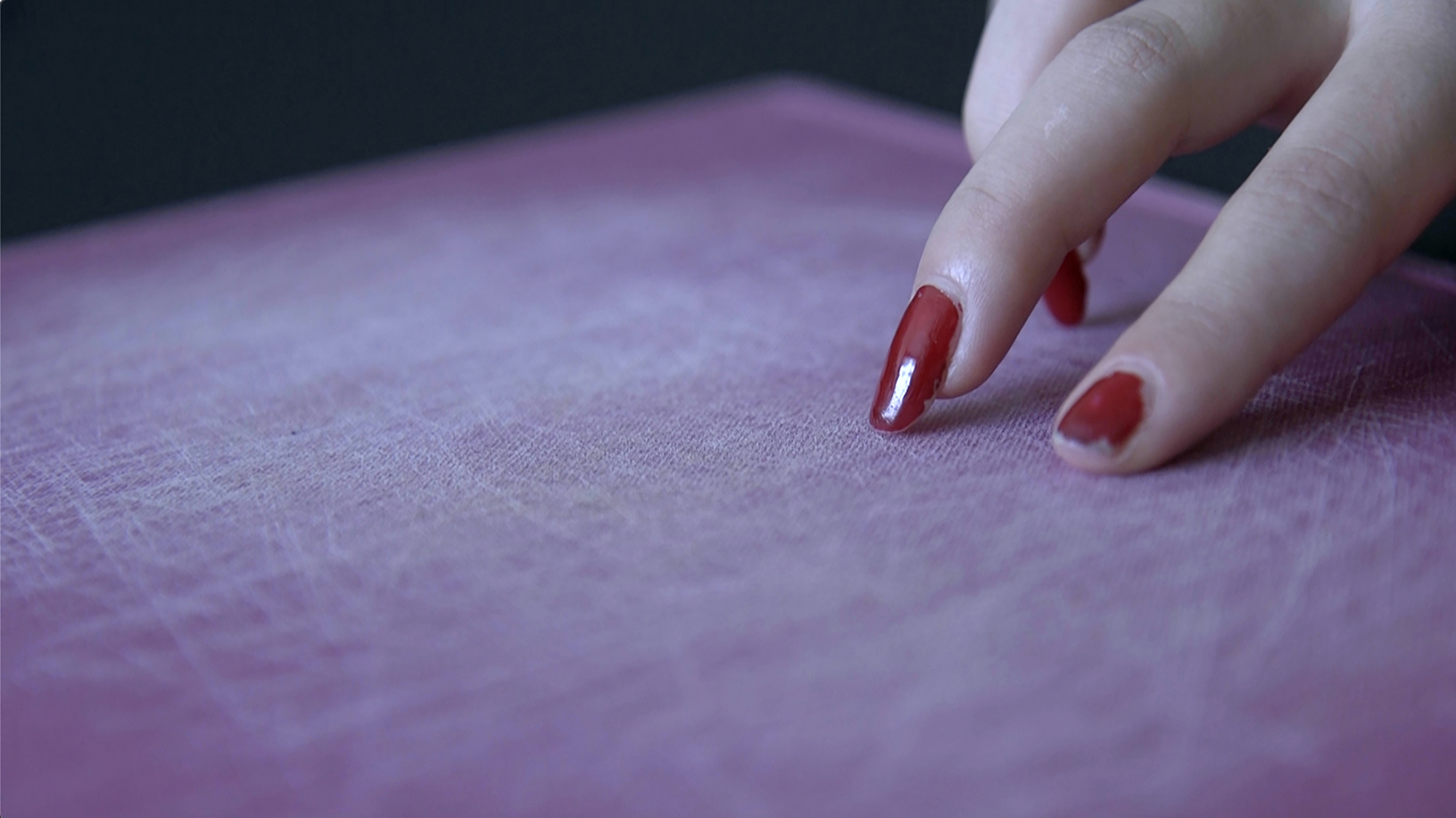
Rohin is a video that portrays Rohin’s hand examining the surfaces of a series of cutting boards.
She travelled with her family from Syria to Turkey where she left her parents and siblings behind and continued on her own, 12 years old, to Denmark. One of the first things that she was given at the Refugee Asylum for Children was a series of domestic objects, such as a cutting board, pots, and pans, which was a common package that everyone received upon their arrival.
The collection of cutting boards that are present in the film come from one of the centers where Rohin was living. These objects have accumulated different forms of repetition through time - the repetition of policy and procedure alongside the intimacy of the repetition of domestic routines.
Each of these objects is inscribed by these repetitions, but with a subjectivity that rearranges the rhythm and transforms the marks on the board into another kind of language.
Editing: Anastasija (Nastija) Kiake.
The Memory of Salt, 2022 – 2024
(Photo)
The Memory of Salt consists of photographic documentation of the interior and exterior architecture of some of the 89 Refugee Asylum Centers and Emergency Aid Centers that closed in 2018. The project is a response to the absence of archival material that preserves the contemporary history of migration (2015-18) in the local archives in Denmark.
It questions this gap while examining photography as a method for holding space for the narration of the experience of the former residents whose life was impacted by these locations. By documenting the remains of the material reality, intending to create a poetic/subjective document of this part of Danish history as an act of bearing witness, holding attention, and creating strategies for remembering.
Printing: Christer Järeslätt
Framing: Værksted for Fotografi
Earth, Soil and Stone, 2022-2025
(Video and Photogrammetry)
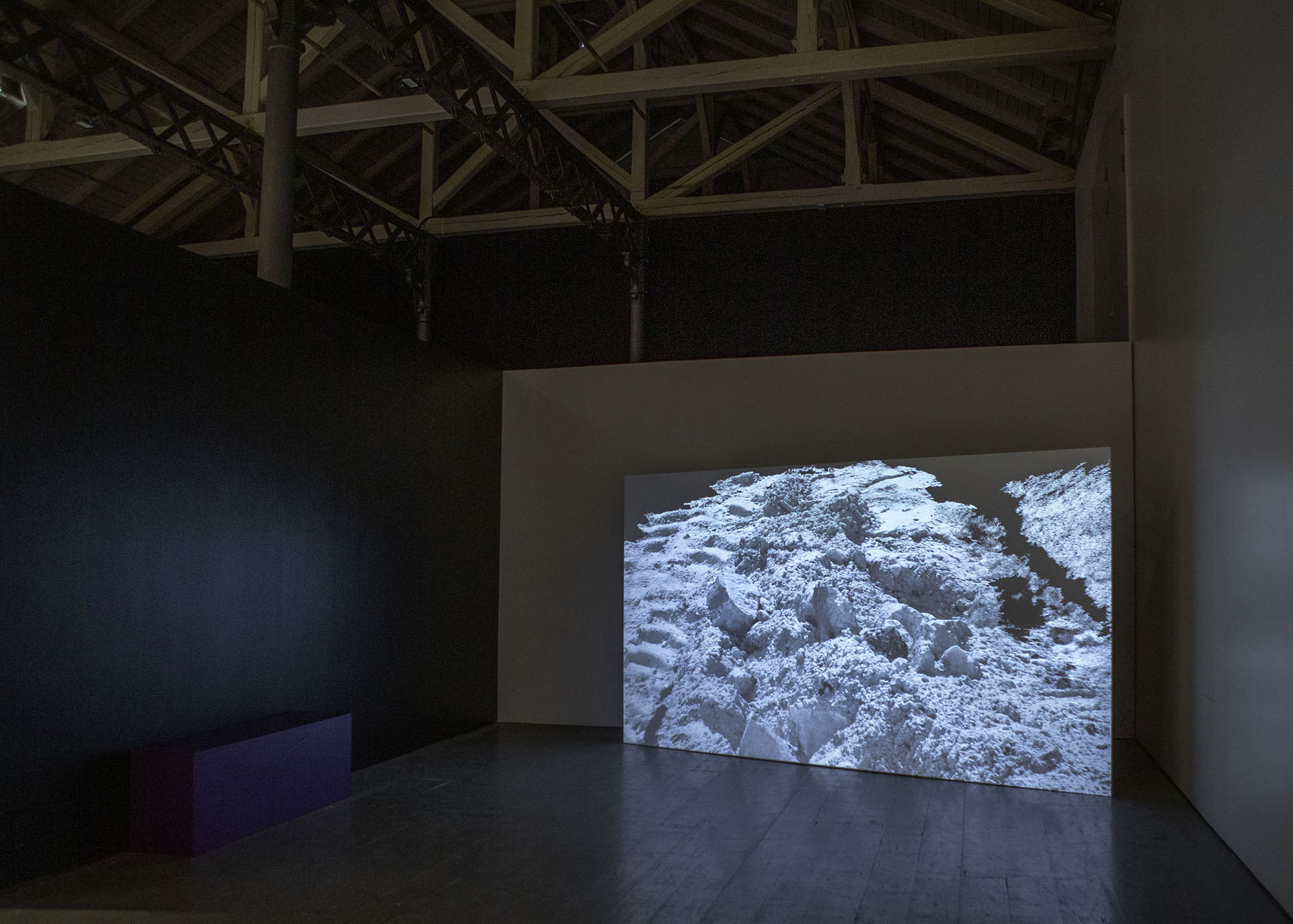
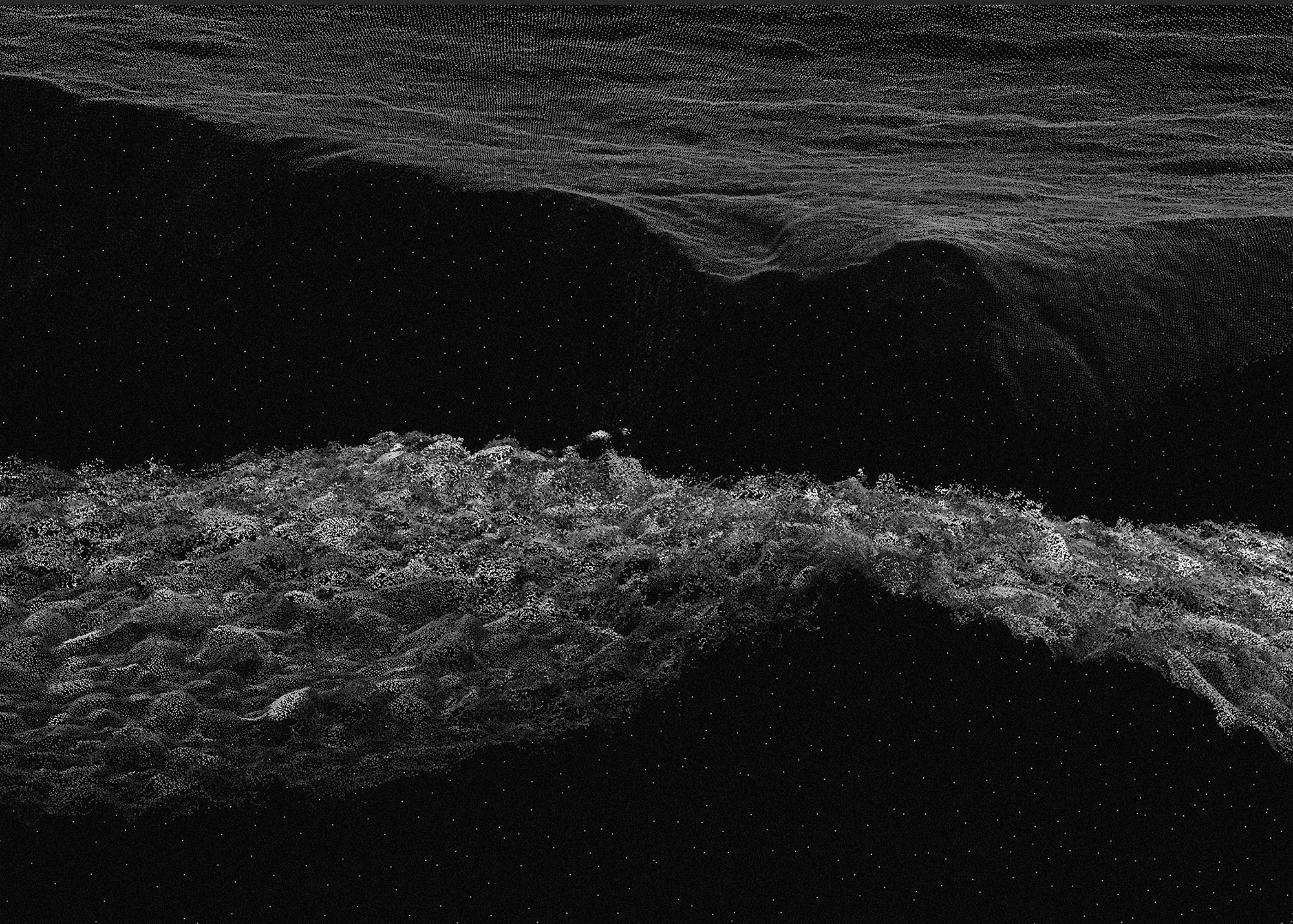
The video consists of 3D models of 89 locations of Refugee Asylum and Emergency Aid Centers that were closed in 2018. Corresponding to the projection of Gloslunde Refugee Asylum Center, each location resembles a mountain. When documenting these locations, the frame was to look for the tallest point within the landscape.
Each model consists of a vast number of photographs, 150-300 images have been processed to shape the point cloud of the environments represented in the video. A point cloud is a collection of data points that corresponds to a specific spatial measurement of the surface of an object. When combined, these points collectively shape a map of the object’s entire external surface which allows it to be transformed into a 3D model. In that way, it’s possible to document and preserve landscapes and objects with high precision.
As this project examines the question of preservation, the focus was on finding a poetic methodology for collecting, interpreting, and structuring data. Each location, each mountain, holds the concrete information of its environment while dissolving into an abstraction, that opens up a space beyond measurement.
Editing and 3D modeling: Anastasija (Nastija) Kiake.
Earth, Soil and Stone, 2022-2025
(Photogrammetry, and chalk mural)
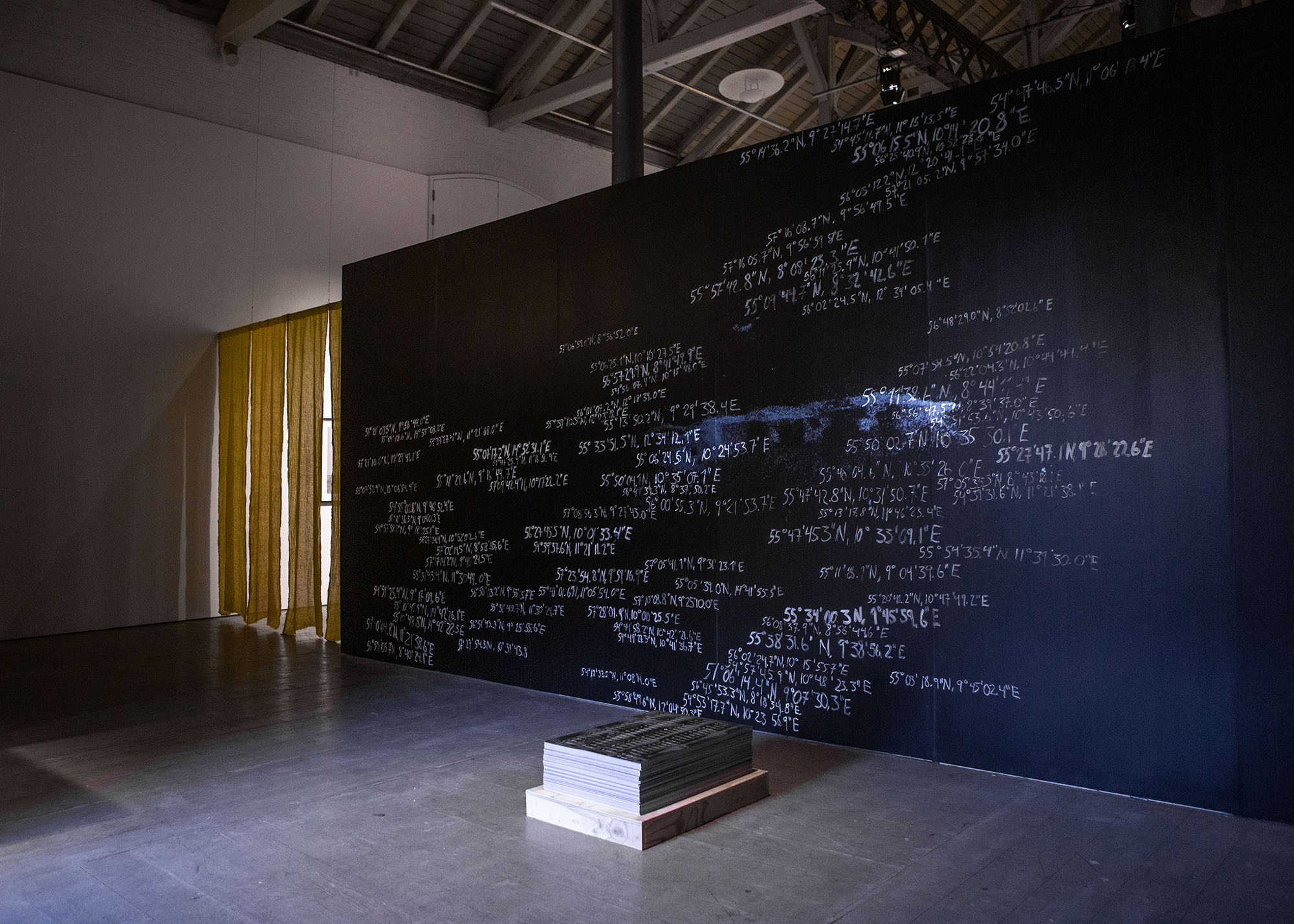
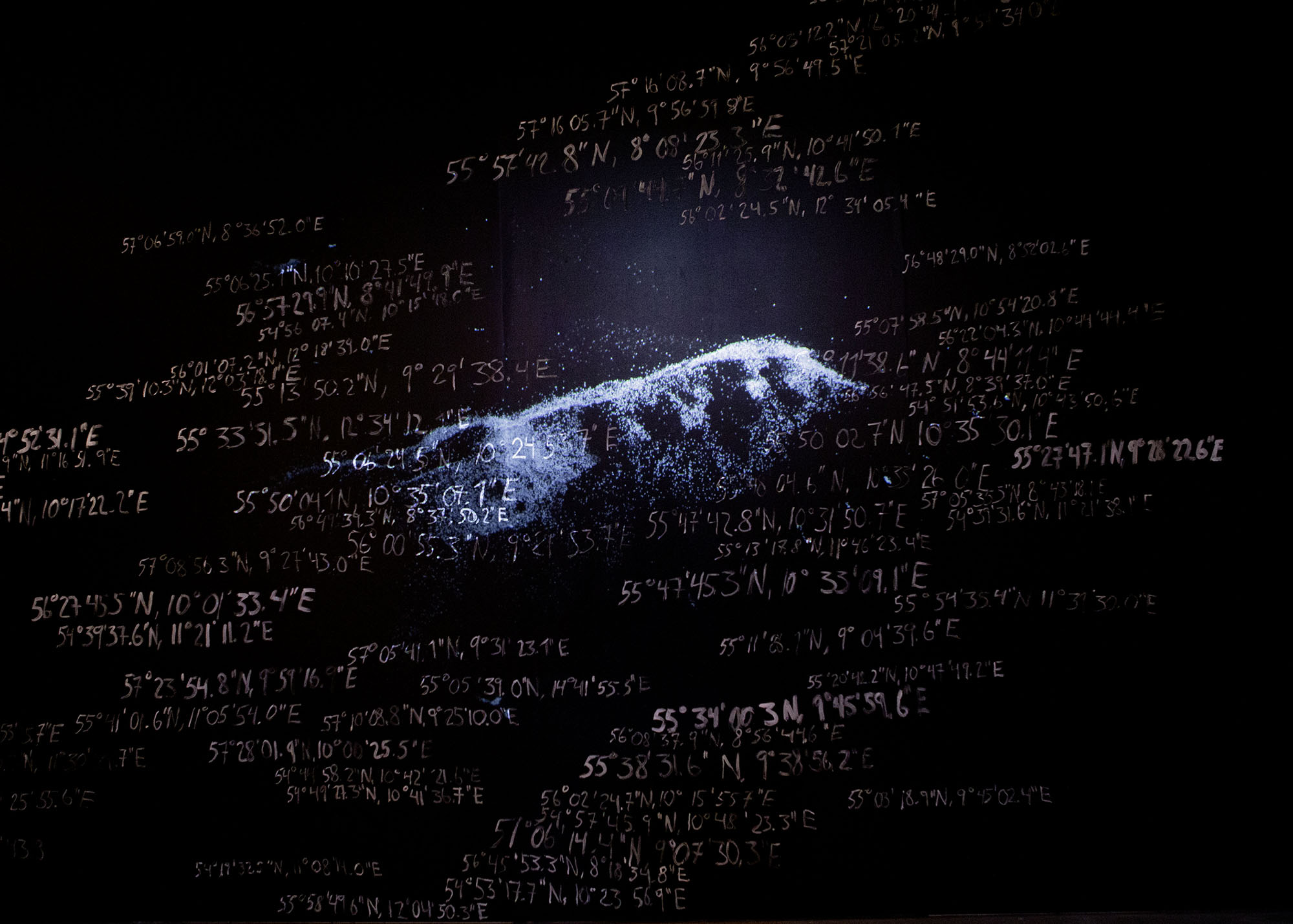
The projection shows a 3D model of a mound of chalk found in Dannemare, Lolland where the Gloslunde Refugee Asylum Center once was located. This was the first location documented at the beginning of the process of mapping the 89 Refugee Asylum Centers and Emergency Aid Centers that have been closed since 2018. The coordinates of all of these locations are written in chalk on a surface where the spinning mound of Gloslunde Refugee Asylum Center is projected.
This video shows the remains of Gloslunde Refugee Asylum Center, or rather its complete erasure and replacement. Chalk, commonly used as a fertilizer for farmland soil, become a witnessing material, shaped into a form resembling a mountain.
The form of a mountain, the tallest point of the landscape of the location, has subsequently determined how the remaining 3D models have been shaped. Calling in these mountains as witnesses, this project is a conversation about preservation – what gets preserved and what does not.
Editing, 3D modeling and chalk mural: Anastasija (Nastija) Kiake.
The exhibition is supported by the Danish Arts Foundation, the Augustinus Foundation, and the New Carlsberg Foundation. The artists’ production of works for the exhibition is supported by Danish Visual Arts, the Danish Arts Foundation, the Danish Art Workshops, the Council for Visual Arts, Grosserer L.F. Foghts Fond, Beckett-Foundation, Nordic Culture Fund Opstart, The Swedish Arts Grant Committee.